
Patient Situation:
- 71-year-old male
- May 2019, laparoscopic radical colon cancer surgery for colon cancer.
- November 2022, recurrence of abdominal wall metastases, treated with radical tumour surgery.In January 2024, the patient confirmed recurrence with pain for 1 month.
Patient Details:
- In May 2019, the patient underwent laparoscopic radical colon cancer surgery for cancer of the splenic region of the colon. postoperative pathology suggested ulcerated moderately differentiated adenocarcinoma of the splenic flexure of the colon, infiltrating the entire length of the intestinal wall to the outer plasma subepithelial adipose tissue of the intestinal wall, with no cancer seen at the second cut end or free margins, and no metastasis of cancer in the lymph nodes 0/11.
- In November 2022, A radical excision of the abdominal wall tumor was carried out upon the diagnosis of metastatic cancer of the right lower abdomen wall. The entire abdominal wall muscle deficiency was rebuilt using a biological graft of basement membrane.
- In January 2024, In January 2024, a right lower abdominal wall mass was found again, measuring about 7x8cm, with poor mobility and accompanied by pain in the right inguinal area. The diagnosis of postoperative abdominal wall metastases from colon cancer was confirmed with secondary surgery for recurrence. Accompany with concomitant lateral pelvic, ilioinguinal, abdominal wall and macrovascular invasion.
Results:
- A radical tumor resection was carried out, and the artificial vessel bridges were rebuilt, the visceral capsule’s integrity was restored, the ilioinguinal ligament was rebuilt to ensure the stability of the abdominal wall reconstruction’s lower edge, and the abdominal wall was reconstructed to make sure that there were no heavy abdominal adhesions or organ erosions.
- The patient was allowed to stay out of the bed 24 hours after the procedure, and 60 hours later, bowel function was restored. The total amount of bleeding that occurred throughout the procedure was 100 ml.
Preoperative Preparation
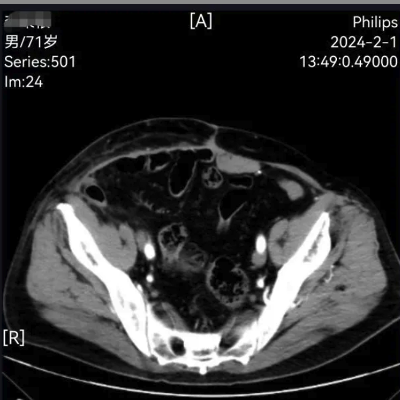
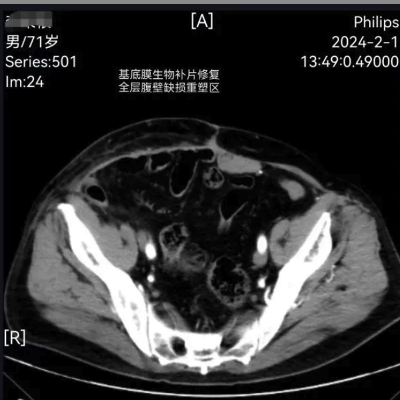
Fig.1: enhancement CT (Reconstructed abdominal wall by the biological graft implanted in 2022)
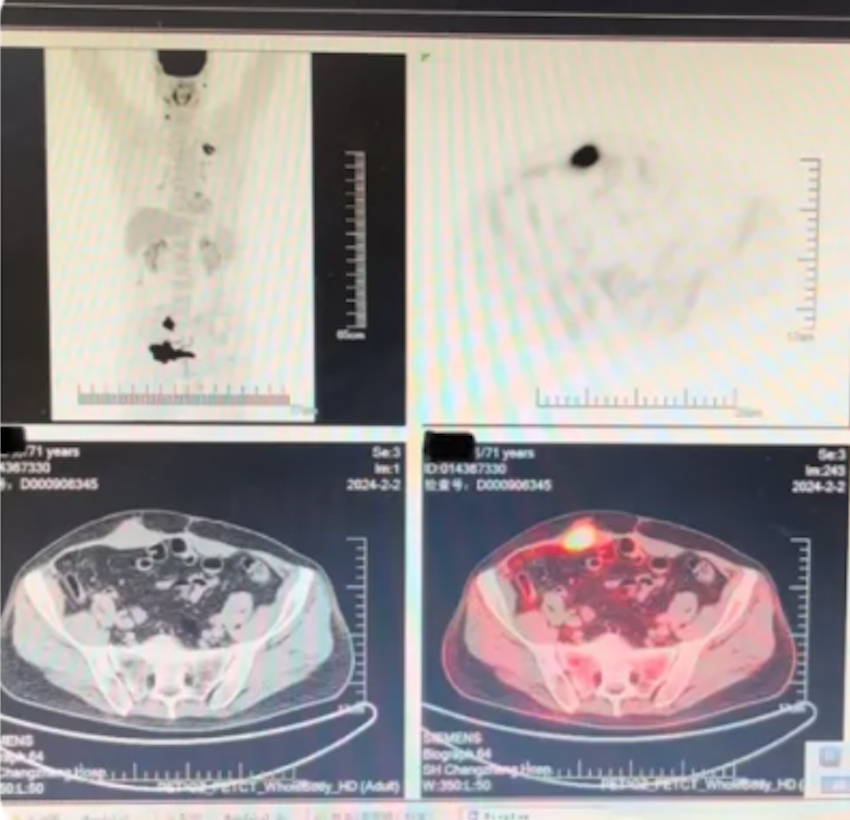
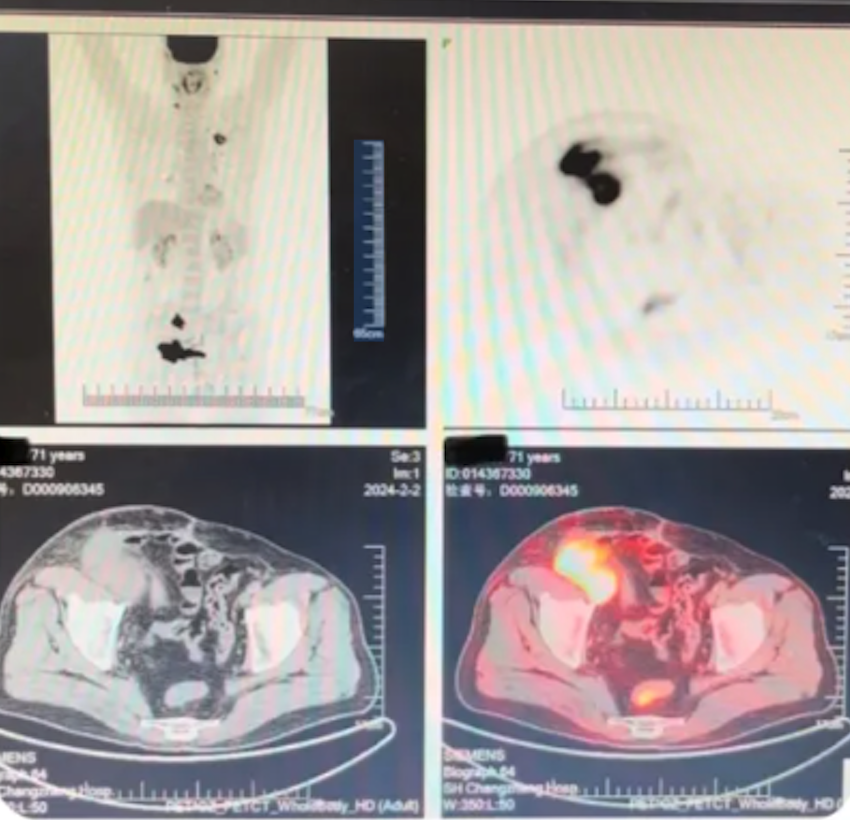
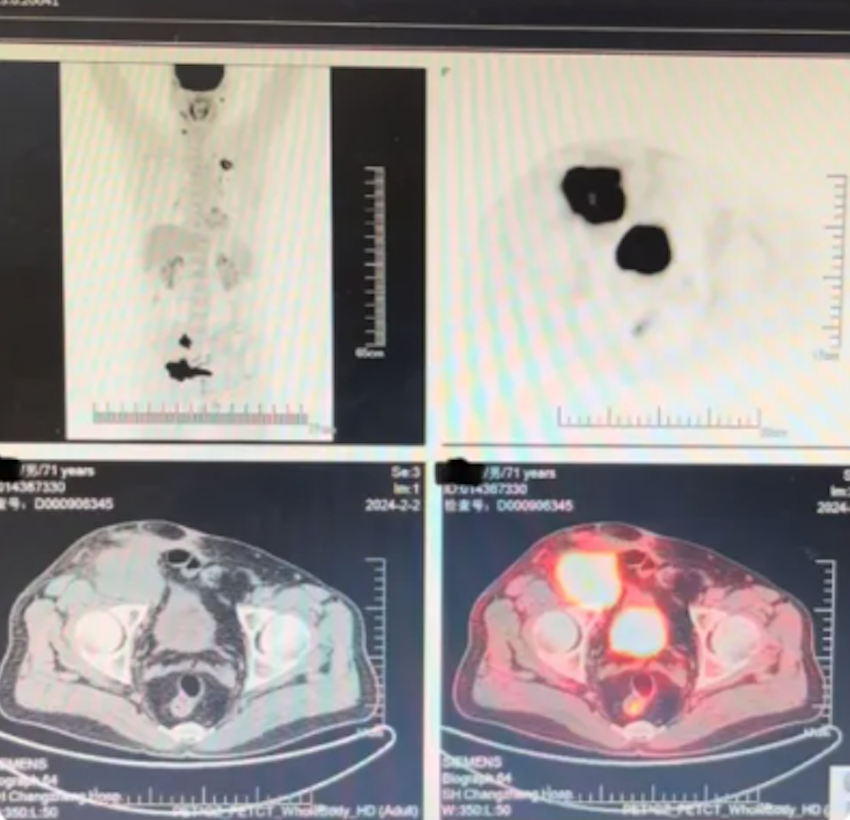
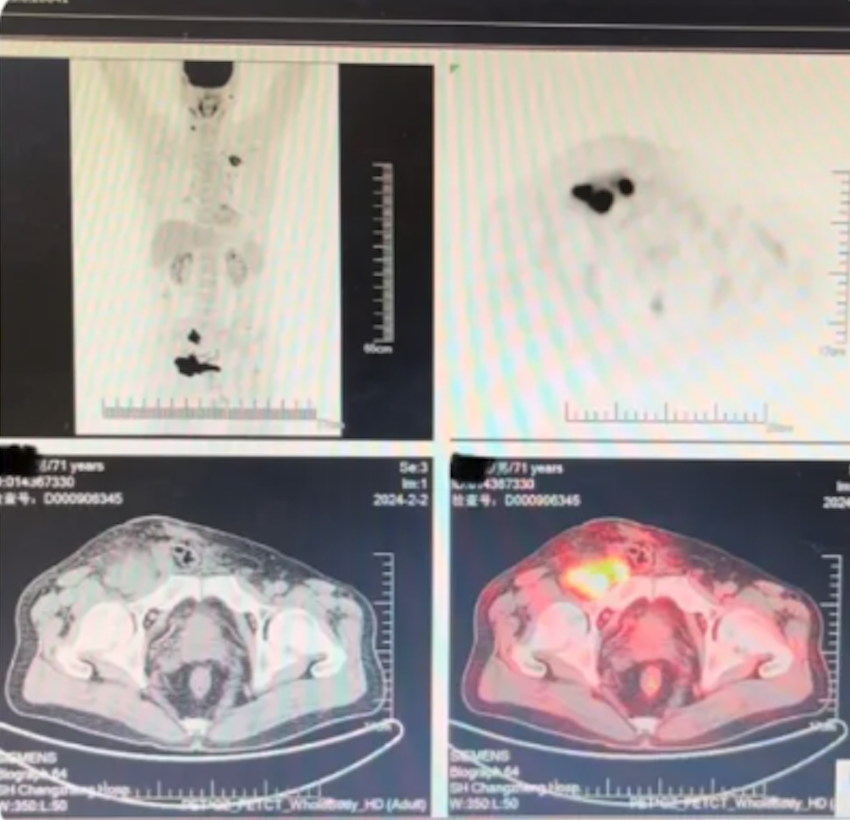
Fig.2:PET-CT
Surgical Plan and Process
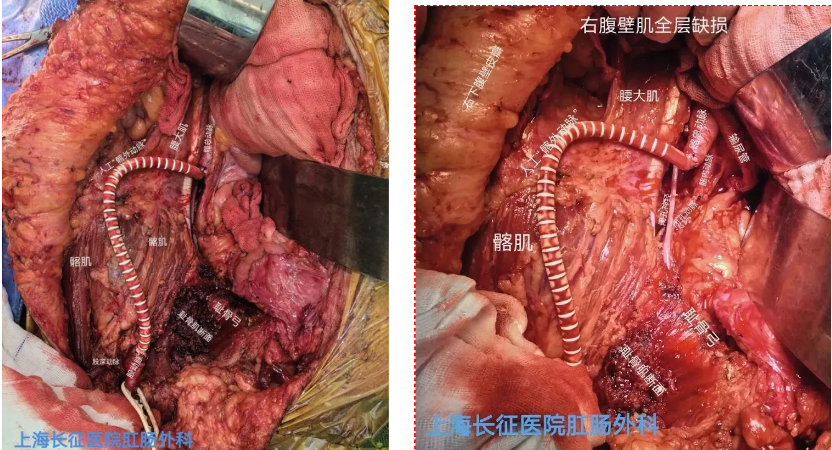
Step 1: Resection and reconstruction of the external iliac artery.
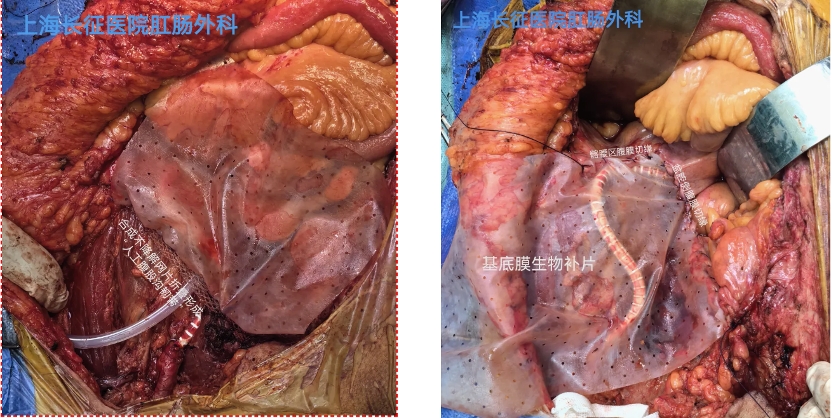
Step 2: Restoring the integrity of the visceral capsule and accelerating the recovery of digestive tract function

Step 3: Use “Artificial inguinal ligament” to maintain the stability
of the lower edge of the abdominal wall reconstruction
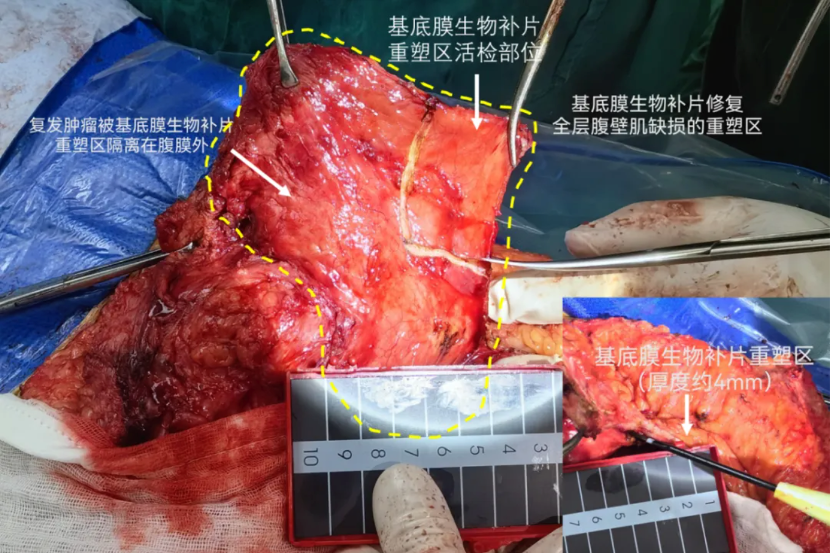
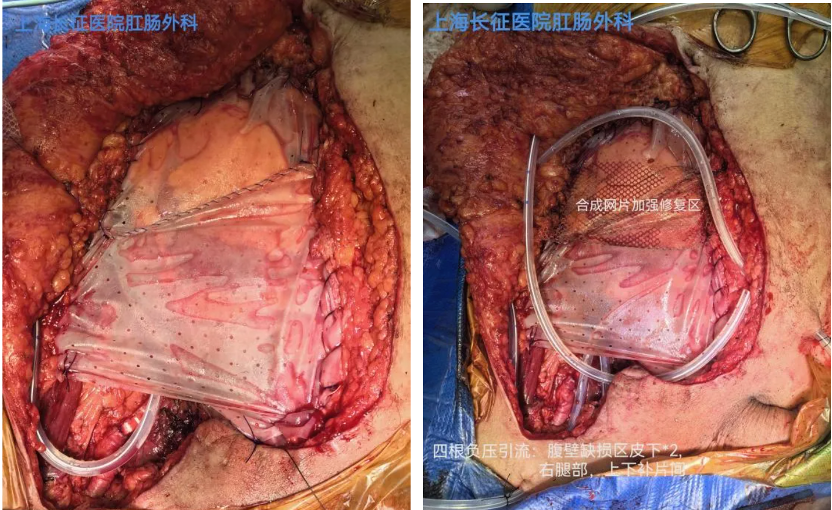
Step 4: Reconstruction of full-layer abdominal wall muscle
defect with Basement Membrane biological graft
+ synthetic non-degradable mesh reinforcement to
ensure no distant abdominal wall bulge and abdominal wall hernia
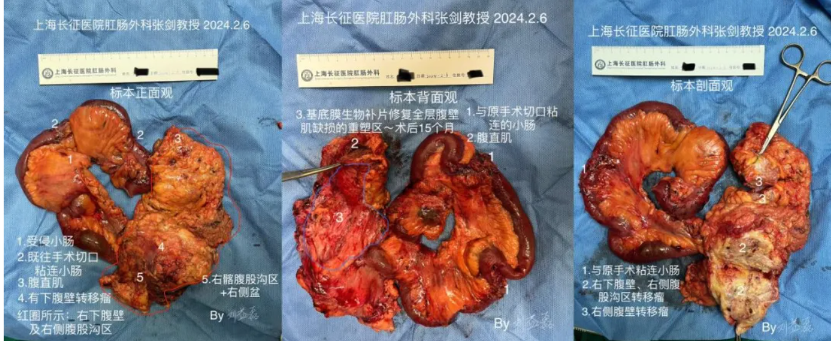
Fig.6: The removed tumor from top (left), back (middle) and cross-section (right) views.
Summary:
- The operation lasted 10 hours, with bleeding of about 100 ml (no blood transfusion). The operation was completed according to the plan, including bridging of the vessels, radical resection of the tumour/right lower abdominal wall/lateral pelvis/iliac inguinal area, reconstruction of the inguinal ligament, reconstruction of the iliac inguinal capsule, reconstruction of the gastrointestinal tract, and reconstruction of the right lower abdominal wall.
- The patient had an early postoperative pain score (NRS) less than 3, was got off the bed 24h postoperatively, and resumed defecation at 60 hours postoperatively, without other complications such as fever.
Surgeon:

Prof. Jian Zhang
• Director, Department of Colorectal Surgery, Naval Medical University Shanghai Changzheng Hospital
• Director of Pelvic Exenteration Committee of the Chinese Medical Doctor Association